
The moment your handset crosses a state line into a jurisdiction that treats real-money gambling as a felony, the app's location stack fires a hard kill switch that no user toggle can override.
I have torn apart the binaries on more than a few of these installations, and the mechanism is brutally simple: a mandatory location check runs at cold start, on every session resume, and at randomized intervals during live play. The app does not ask you politely to leave. It detects the change and slams the door shut. If you are sitting on a Vegas-bound flight and the plane dips into Utah airspace with your device awake, that background geofence refresh can trigger a shutdown before you even order a drink. 🎯
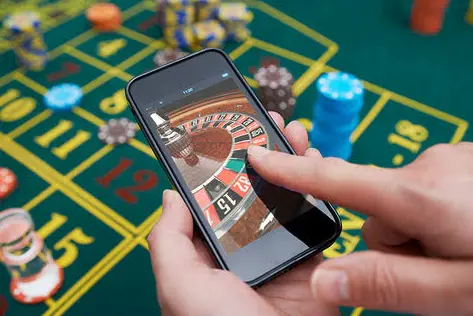
The Geofence Handshake You Never See
What most players fail to understand is that a casino app is not checking whether you are physically inside a legal state. It is checking whether it can prove you are. That distinction matters enormously in audit logs. The client-side app pulls coarse location from the OS, cross-references it against a server-side boundary polygon, and then runs a secondary integrity check that looks at GPS drift, cell tower triangulation, and IP address coherence. If any layer disagrees, the app defaults to deny. This is called a fail-closed architecture, and it is the single most important design principle in US casino app compliance.
Here is the ugly truth the marketing pages will never tell you: the geofence polygon used by operators is often drawn tighter than the actual state border. I have seen boundary buffers of up to two miles pushed inward specifically to account for GPS error margins near airports and highway corridors. So you can be physically standing in a legal state, within sight of a welcome sign, and still get locked out because your reported coordinate drifted into a no-go buffer zone. 🛰️

What the Block Actually Looks Like
When the location check fails, the behavior varies by operator but follows three recognizable patterns. First pattern: a full-screen modal appears with language about your current location not being eligible, and the session token is invalidated server-side within seconds. Second pattern: the app silently fails to load the lobby, hanging on a spinner while the backend refuses to issue a game session token. Third pattern, and the one that gets operators fined: the app lets you browse the lobby but blocks the moment you tap into a specific game title. That third pattern is a regulatory liability because it implies the operator knew the location was problematic but allowed UI interaction anyway.
From a geolocation compliance standpoint, patterns one and two are defensible. Pattern three is a forensic nightmare. I have reviewed audit trails where a player navigated forty-seven screens deep into a wagering flow before the kill switch fired, and the regulator treated every one of those interactions as a policy violation. The lesson for operators is unforgiving: block early, block loud, and log every denied session with the exact coordinate and timestamp.
The VPN Illusion and the Integrity Layer
Every forum thread about this topic devolves into someone claiming a commercial VPN defeats the check. That advice is dangerously stale. Modern casino app geofence enforcement does not rely on IP alone, and the integrity layer compares your device's native location services against the network origin. A mismatch between a residential IP in Montana and a GPS fix in Nevada is an instant fraud flag, not a clever workaround. The app may soft-lock for a few minutes, then push a compliance review that freezes withdrawals pending manual clearance. I have watched accounts with five-figure balances sit frozen for three weeks over a fifteen-minute border crossing.
The deeper technical reality is that location services on both major mobile operating systems are increasingly resistant to spoofing at the app level. Mock location providers are detectable through API call patterns, developer options flags, and sensor fusion anomalies. An app that audits this properly will catch a spoofed fix within a single session. The operators who skip that audit are the ones whose licenses get pulled. 🚨
Session Tokens, DraftKings-Style Hard Stops, and the Two-Minute Rule
Pull the network traffic and you will see the real choreography. The client authenticates, receives a short-lived session token, and that token is bound to the geohash of your verified location at issuance. Move outside the boundary and the next token refresh fails, which is why the block often lands within one hundred twenty seconds of a border crossing even if you never touched the screen. Some platforms shorten refresh intervals to sixty seconds near state lines as a precaution. That is not paranoia; that is a calculated response to enforcement actions that penalize operators for allowing even brief out-of-state wagering windows.
If you are traveling, the only professional move is to force-quit the app before you enter a non-legal jurisdiction and leave it closed until you are confirmed back inside a permitted boundary with a clean GPS lock. Anything else is gambling with your balance and your account standing at the same time. The kill switch does not care about your intentions, your flight itinerary, or your loyalty tier. It reads coordinates, and it never blinks.